
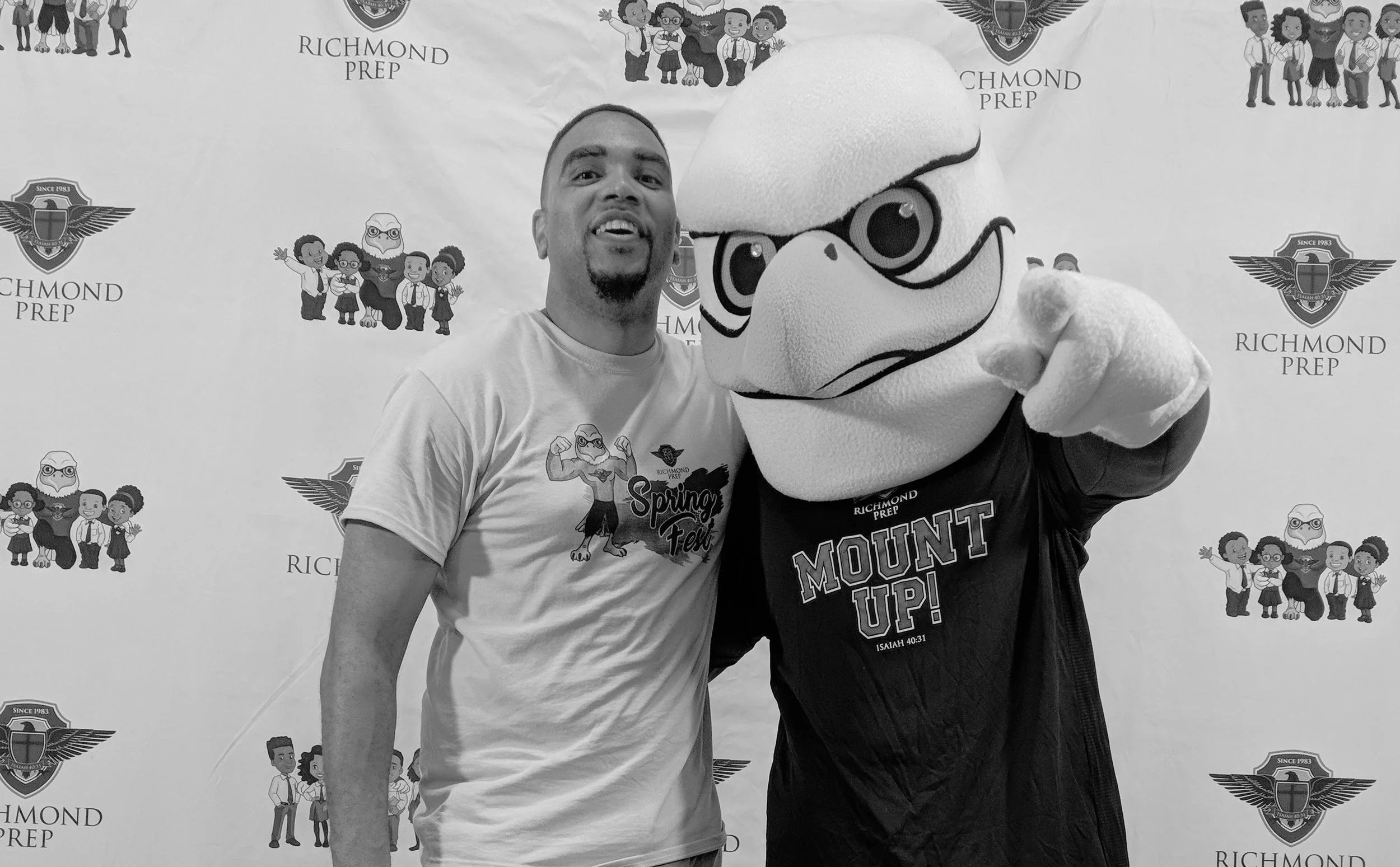
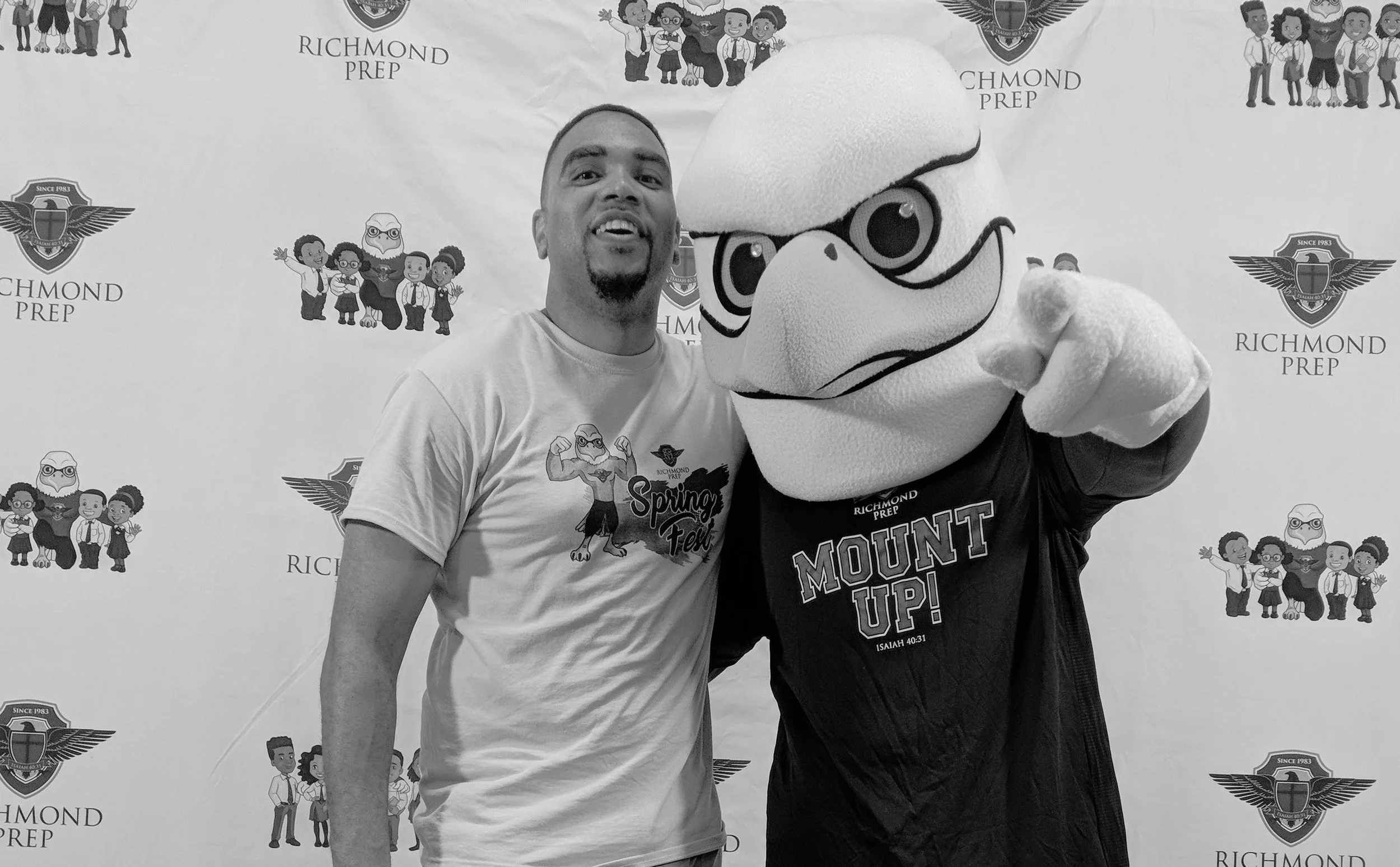
I remember sitting in the gym at Richmond Prep in 2016. We had just finished our Spring Fest event - an event that lasted a full week including a carnival, our Community Leaders Basketball Game, a fashion show, and lots of Spirit Week activities for our students. The decorations were still up in the gym. There was no one left in the building except me and the school mascot, Isaiah the Eagle, and I was, quite frankly, exhausted. We had spent six months planning this week of activities. We had "reached out" to every donor, every local leader, and every family in our database. The room had been full. Fun was had and funds were raised.
But as I sat there in the quiet, watching the shadows stretch across the gym floor: a scene that felt like a Gordon Parks photograph, captured in that high-contrast, intimate stillness: I felt a profound sense of… well… hollowness.
We had done a great job of outreach. We had shouted from the mountaintops, and people had come. But as they filed out of the double doors, I realized I had no idea if they would ever come back. I had built a tent, but I hadn't built a home. I was a promoter, not a Community Architect.
As we navigate the complexities of 2026, I see so many builders, leaders of institutions, and visionaries making the same mistake. You are burning yourselves out on the treadmill of "outreach," when what your mission actually requires is the infrastructure of "engagement."

The Fatigue of the One-Off
In the parlance of my work, we talk a great deal about the RICH life: Real Estate, Intellectual, Cultural, and Heart. When we lead through the lens of outreach, we are usually neglecting the "Heart" and "Intellectual" infrastructure.
Outreach is a shout. It is transactional. It is the "Tell and Hope" method: you tell people what you’re doing and you hope they care enough to show up. It is a one-way street where you are the broadcaster and the community is the consumer. It’s a sprint that leaves you breathless and, eventually, bitter.
I’ve been there. I’ve lived in that space of being miserable while looking successful. I’ve felt the weight of trying to sustain a movement through sheer force of will and a series of disconnected events. But the "Third Reconstruction" we are currently building demands something more permanent. We are in the business of institution-building, and you cannot build an institution on a series of one-off events.
The Blueprint of Always-On Systems
Engagement, by contrast, is a conversation. It is a bi-directional loop. It is not something you "do" for a season; it is an always-on system that breathes with the community.
As a Community Architect, my job is to help you design the infrastructure that allows your leadership to scale without your constant, physical presence. In 2026, the shift in leadership style is away from the "charismatic figurehead" and toward the "systemic steward."
If outreach is a tent, engagement is the plumbing, the electrical grid, and the foundation of a building. Engagement is the infrastructure for institutional endurance.
Consider the difference in the way we communicate:
Outreach asks: "Will you come to my event?"
Engagement asks: "What are the rhythms of your life, and how can this organization serve them?"
One is about your needs; the other is about the residents of the community you are building.
Moving From Transaction to Transformation
I think about the prophet Nehemiah quite often. He wasn't just a man with a vision; he was a master of systems. He understood that to rebuild the walls of Jerusalem, he needed people who were stationed at their own part of the wall, working with a tool in one hand and a weapon in the other. He didn't just hold a rally; he built a system of shared responsibility and constant communication.
“Those who were rebuilding the wall and those who carried burdens took their load with one hand doing the work and the other holding a weapon.” (Nehemiah 4:17)
In your business or your nonprofit, are you giving your people the tools to build their own section of the wall? Or are you asking them to just watch you build yours?
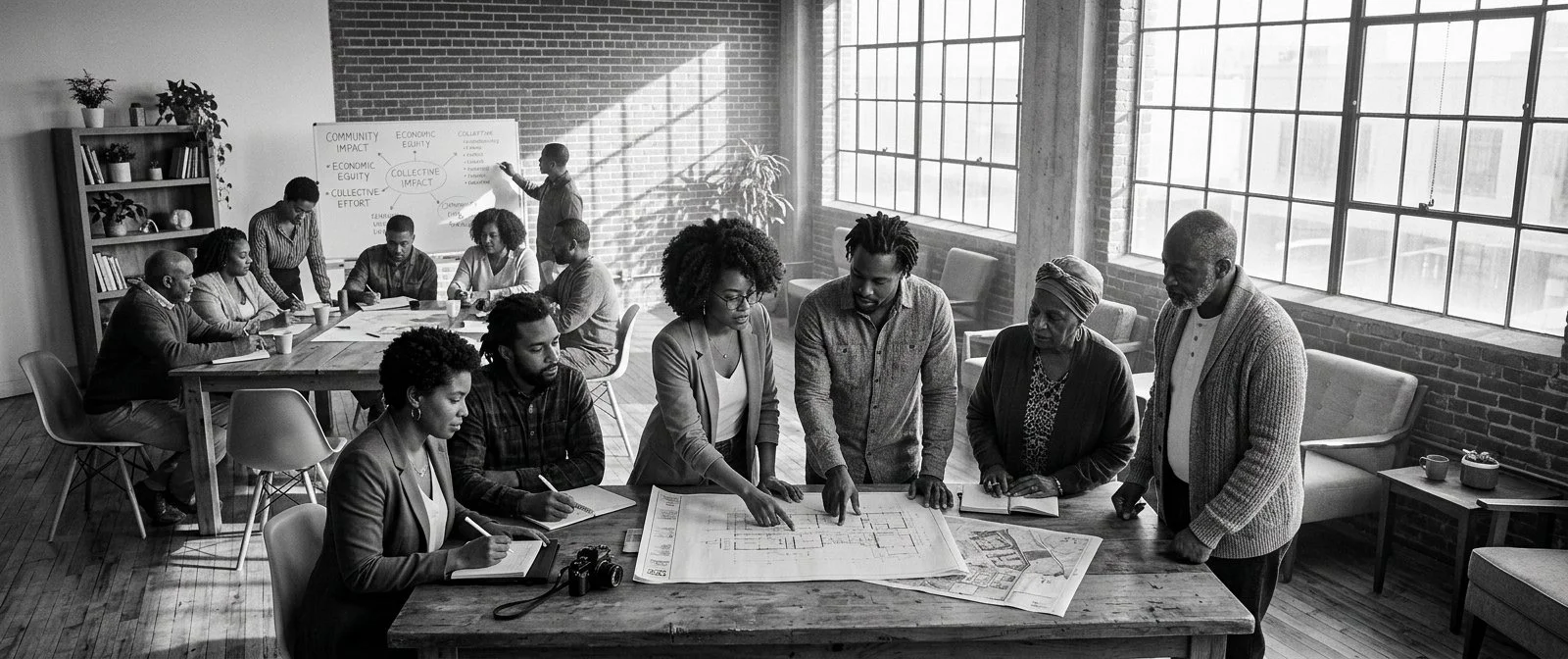
When you implement always-on systems, you move from "doing for" the community to "building with" them. This is the only way to achieve the cultural preservation we talk about at OVRCMNG. We don't just want to remember our history; we want to own the future. That requires a capital stack of engagement: a layer of digital tools, physical spaces, and emotional safety that ensures the work continues long after the gala lights go out.
The 2026 Leadership Mandate: Trust the Process
We are living in a time where people are skeptical of the "hustle." They are tired of being marketed to. They are looking for depth.
To lead effectively in 2026, you must be willing to avoid the craving for the spotlight. You must resist the urge to bask in the comfort of a singular successful outreach event and embrace the quiet satisfaction of a working system. It’s a difficult transition. It requires you to keep ego in check and realize that your mission is bigger than your personal visibility. That's hard to do in the “personal brand" era.
The leadership style of the future is grounded and elevated. It is direct. It doesn't hide behind corporate jargon like "synergy" or "leverage." It speaks plainly about the blueprint.
Are your systems designed to catch the energy of the people you reach? If a thousand new people discovered your work tomorrow, would your infrastructure hold them? Or would they fall through the cracks of your "outreach-only" model?
Building the Infrastructure of Each Other
I’ve had to learn the hard way that Trusting the Process isn't just a catchy phrase; it’s a spiritual discipline. It’s the realization that God’s blessing often comes in the form of a system, not a miracle. The miracle is the vision; the system is the stewardship of that vision.
When we build "always-on" engagement systems, we are practicing a form of spiritual architecture. We are creating a space where people can show up as their full selves, where their Intellectual and Heart assets are protected and nurtured. We are moving away from the exhaustion of the grind and toward the peace of a well-ordered life.

Does my concept of this feel too abstract? Ask yourself this: When was the last time you felt truly connected to your audience without having to sell them something? If you can’t answer that, you have an engagement problem.
A Final Affirmation for the Builder
I want to encourage you, not as a guru, but as a fellow resident in this community we are building together. Do not get weary in well-doing, but do get weary of doing things the hard way. There is a more excellent way to lead. There is a way to build that doesn't require you to sacrifice your peace on the altar of "outreach."
Your vision is too important to be a secret, and it is too sacred to be a transaction.
Let’s stop shouting and start building. Let’s trade the megaphone for the blueprint. Let’s move from the intermittent spark of outreach to the steady, warm glow of a system that never turns off.
If you are ready to look at your leadership through the lens of a Community Architect: to move past the superficial and into the authentic architecture of engagement: I am here to help you draft that plan.
Are you building a tent or a home? Let’s talk about your infrastructure.
Book a strategy session with Jon
Reflect on this today: Is your current leadership style sustainable for the next ten years, or are you one "outreach" event away from total exhaustion? What is one system you can put in place today that doesn't require your manual effort to run tomorrow?