
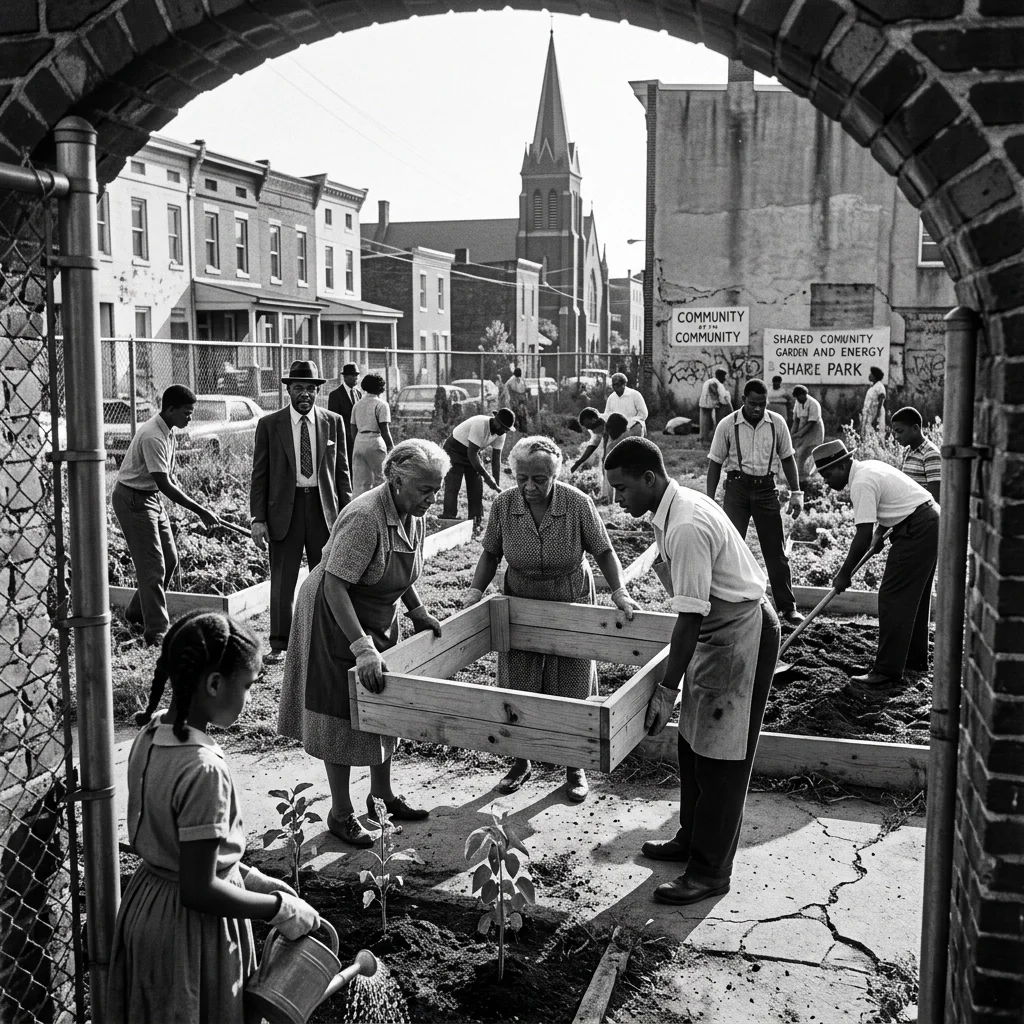
There is a specific kind of light that hits a sanctuary on Sunday morning. It’s a Gordon Parks kind of light: cinematic, heavy with history, and deeply intimate. You see it in the sharp crease of a deacon’s trousers and the deliberate tilt of a grandmother’s hat. For a few hours, the air is thick with "Gathering Energy." It’s a spiritual electricity generated by collective hope, shared struggle, and the high-frequency vibration of a Hammond B3 organ.
But I’ve often found myself sitting in the quiet of a Monday morning, watching dust motes dance in that same light, feeling a profound sense of exhaustion. I’ve realized that for too long, we have been masters of the moment but novices of the monument. We excel at gathering, but we struggle to ground that energy into permanent community property.
As a Community Architect, I’ve had to ask myself the hard questions: What happens to that energy when the Sunday Best is folded and put away? Does it evaporate into the atmosphere, or does it settle into the foundation of something we actually own?
The Myth of the Permit
I used to be obsessed with permission. I thought that to build something of lasting value: something that qualified as a RICH life (Real Estate, Intellectual, Cultural, Heart): I needed a permit from the existing power structures. I was miserable trying to fit my vision into their blueprints. I felt like I was trusting the process of a system that wasn’t designed for my survival.
Then, I looked closer at our history.
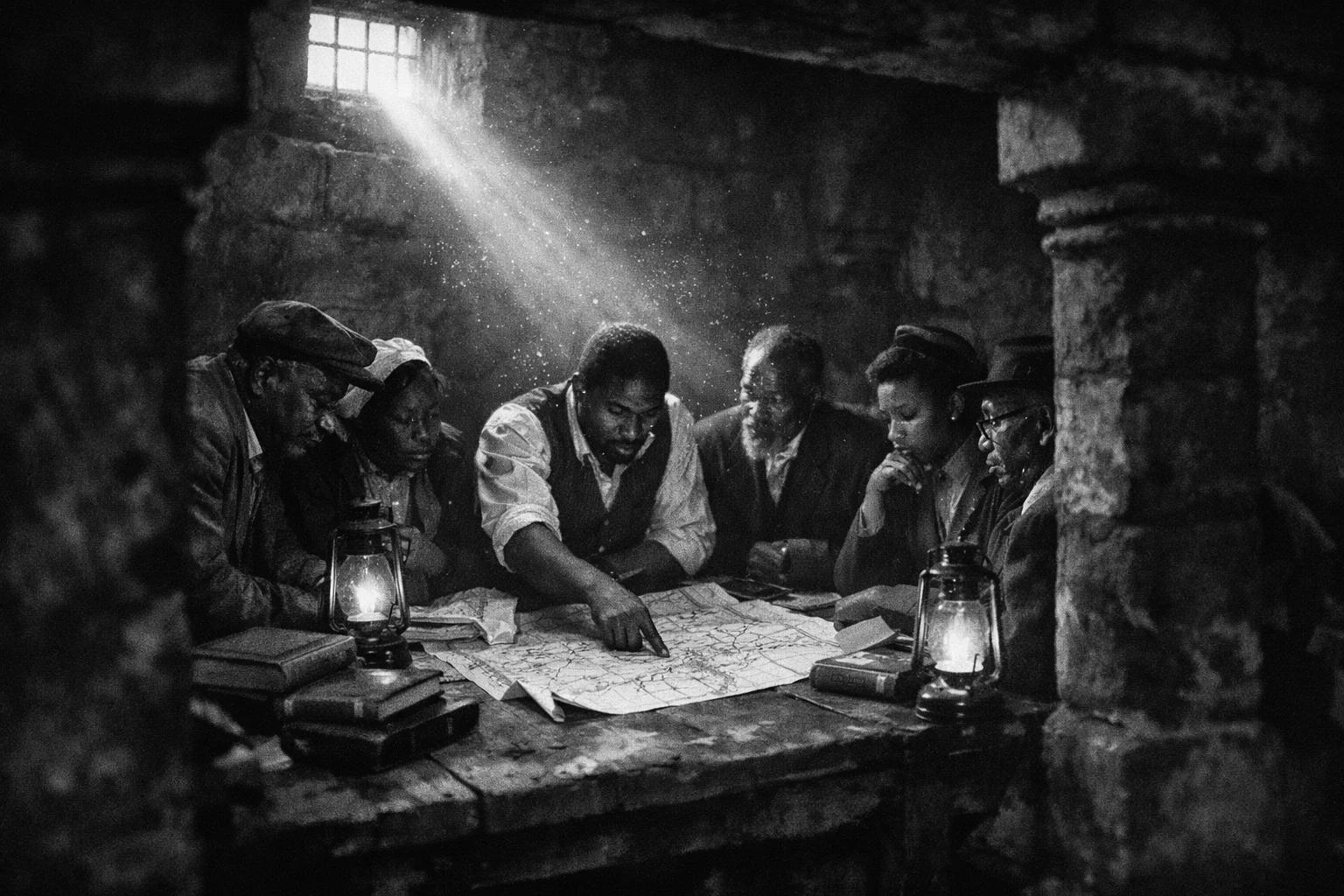
Our ancestors didn’t wait for a zoning board to approve their intellect. They didn’t wait for a developer to grant them space. They took the "Gathering Energy" of the liberated and the longing, and they turned a church basement into a laboratory for leadership. They built without a permit because they understood that the community itself was the infrastructure. They were the original Architects of Each Other.
From Gathering Energy to Infrastructure
We are currently living through what I call the Third Reconstruction. As first-gen wealth builders, we are often the first in our families to have the "Sunday Best" in our bank accounts, but we still feel a lingering poverty in our institutional presence. We have the "Gathering Energy" in our group chats, our brunch spots, and our digital spaces, but how much of it is permanent?
To turn energy into property, we have to look through the four pillars of the Community Architect framework:
1. Real Estate: The Dirt Beneath the Dream
If the gathering doesn't eventually lead to the deed, we are simply renting our culture. I’ve spent years looking at the untapped treasure within our own neighborhoods. When we gather, are we discussing how to acquire the block, or are we just decorating the room we’re leasing? Permanent community property starts with the ground. We must transition from being "residents" of a space to being the owners of the soil.
2. Education: Turning Testimony into Curriculum
The church basement wasn’t just a place for prayer; it was a place for pedagogy. In the "Architects of Each Other" model, your personal journey is intellectual capital. When we share our stories, we aren't just venting; we are building a blueprint. We must move beyond the "gathering" of information and move toward the "institutionalization" of wisdom. If you’ve learned how to navigate the corporate world as a Black professional, that is property. It must be codified and passed down.
3. Culture: Protecting the Digital Hush Harbor
In the days of the "hush harbor," our ancestors gathered in secret places to maintain their humanity. Today, our culture is often harvested by platforms we don't own. We give away our "Gathering Energy" for likes and engagement scores. As an AI-forward consultancy, I believe we must use technology to build our own "Digital Hush Harbors": spaces where our data, our music, and all of our content are protected assets, not just content for someone else’s algorithm.
4. Faith: The Invisible Foundation
This is the "Heart" of the RICH life. It is the internal conviction that we are worthy of permanence. I’ve had moments where my ego tried to convince me that I could do this alone. But the Sunday Best reminds us that the "I" is always secondary to the "We." Faith is the belief that the basement is big enough to hold a university.
The Exhaustion of the Temporary
Let’s be honest: it is miserable to keep starting over.
Many of us are exhausted because we are constantly building "pop-up" lives. We have pop-up businesses, pop-up networks, and pop-up spiritualities. They look great for a season: they are the "Sunday Best" of our careers: but they lack the structural integrity to survive a storm.
I remember a time in my own career when I felt like everything must go. I was performing, gathering, and speaking, but I owned nothing. I was a "thought leader" with no land. I was a "Community Architect" who hadn't yet laid a brick. I had to stop and ask: What am I doing here? (A question I still find myself asking at different stages of growth).
The shift happened when I stopped looking for a seat at the table and started looking at the wood the table was made of. I realized that the energy we generate when we come together is a commodity. It is the most valuable resource we have. If we don’t capture it, we are effectively pouring water into a sieve.
Building the Basement Blueprint
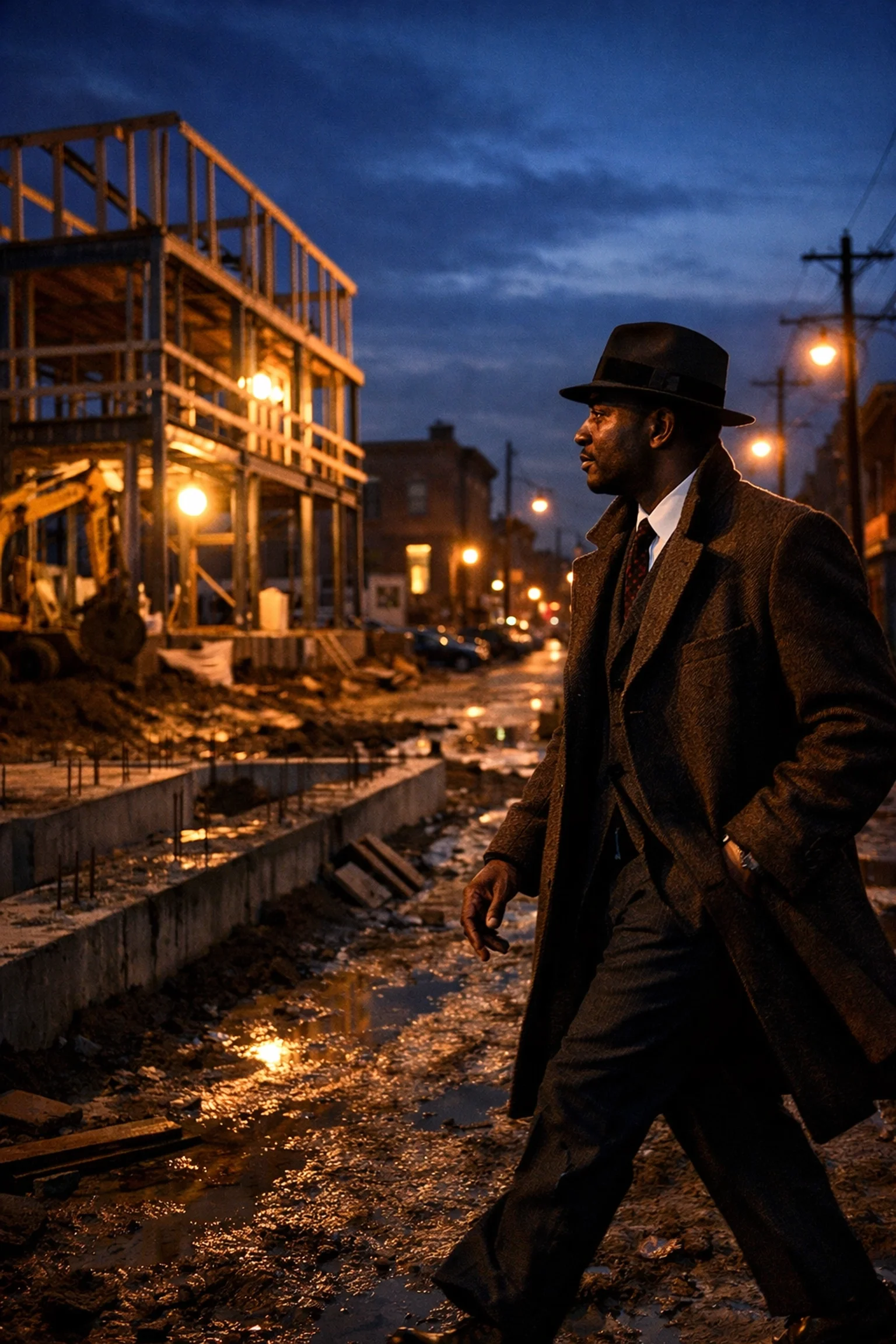
So, how do we begin? How do we, the first-gen professionals, turn our collective momentum into something that outlasts our "Sunday Best"?
Audit the Gathering: Look at where you spend your energy. Is it building a "stage" or a "structure"? If your network is only good for referrals but not for joint ventures or land acquisition, you are still in the "gathering" phase.
Define the Property: What does permanence look like for you? Is it a family trust? A community-owned real estate investment group? A private school curriculum? Be specific. The plan must be as detailed as the vision.
Reject the Permit: Stop waiting for external validation to start your "university." If you have the people and you have the "Gathering Energy," you have the authority. The basement is sufficient until the campus is built.
We must become people who care more about the foundation than the facade. The "Sunday Best" is beautiful, but the "Monday Morning Foundation" is what keeps the family safe.
I’m moving away from the superficial and leaning into the authentic. I want to build things that are "A Love Supreme": works that are dedicated to the Creator and the community in equal measure. I don’t want to look back and realize I was not cutting it because I was too focused on the applause and not enough on the architecture.
A Final Thought for the Architects
You may feel like you’re alone in this. You may feel like the weight of being "the first" is too much to bear. But remember, you are a resident in a larger community of builders. We are the Architects of each other.
The energy you feel when you are around your people: that sense of "we can do anything": is not a temporary high. It is the raw material for your legacy. Don't let it dissipate. Don't let the world convince you that your "Gathering Energy" is just for entertainment. It is for infrastructure. It is for property. It is for us.
Let’s stop being comfortable in the temporary. Let’s not get too comfortable with just "gathering." Let's build something that stays.
“Except the Lord build the house, they labour in vain that build it.”
Are you ready to move from resident to architect? Are you ready to turn your gathering energy into a permanent RICH life?
For more insights on building community and individual legacy, visit our blog or check out our sitemap.